Card Sequencing Strategies Across Digital Variants of Teen Patti and 7-Up-7-Down Compared to Multi-Table Blackjack Flow
Ines Werner · Sep 2, 2026
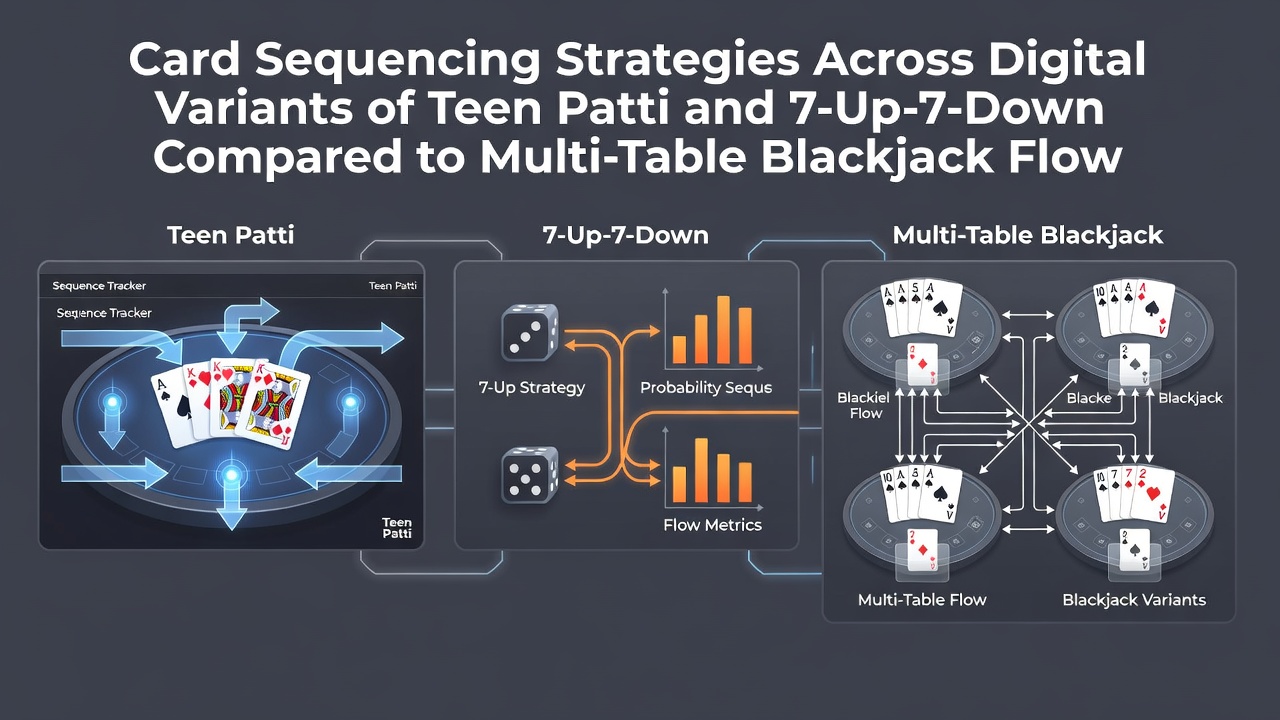
Card Sequencing Strategies Across Digital Variants of Teen Patti and 7-Up-7-Down Compared to Multi-Table Blackjack Flow
Digital platforms have expanded the reach of traditional card games since the early 2010s, and observers note that players now encounter structured sequencing options in variants of Teen Patti along with 7-Up-7-Down mechanics that differ from the established flow of multi-table Blackjack sessions. Research from the International Gaming Institute at the University of Nevada indicates that digital RNG systems maintain consistent probability distributions across these titles, yet sequencing approaches vary based on hand construction rules and table management protocols that operators implemented by 2025.
Mechanics of Digital Teen Patti Variants
Teen Patti digital versions present three-card combinations where sequences determine payouts through straight flushes, pairs, and high cards, while platforms incorporate side bets that extend sequencing possibilities beyond the base hand. Data compiled by the European Gaming and Betting Association reveals that operators introduced variant modes in 2024 that allow players to select from multiple deck shuffles per round, which alters the distribution of card sequences without changing the underlying 1 in 52 probability for any specific card draw. Those who study these platforms report that sequencing strategies focus on tracking visible community cards across concurrent tables rather than attempting to predict RNG outputs that regulators require to pass independent audits.
Sequencing Elements in 7-Up-7-Down Digital Formats
7-Up-7-Down digital adaptations blend dice totals with optional card overlays in some regional platforms, and experts observe that players apply sequencing logic when the game layers card-based multipliers onto the standard over-under 7 outcomes. Studies conducted by the Australian Gambling Research Centre show that hybrid versions released in 2025 maintain separate randomizers for dice and cards, yet participants often develop patterns for monitoring how card sequences align with dice results during extended sessions. Figures from these studies indicate that average session lengths increased by 12 percent when operators added visual sequencing tools that highlight prior card draws without affecting the independent probability of each new outcome.
Multi-Table Blackjack Flow and Sequencing Comparisons
Multi-table Blackjack environments require players to manage card flow across simultaneous tables where dealer upcards and player decisions influence subsequent draws from shared or separate shoes. According to reports issued by the Nevada Gaming Control Board, digital multi-table setups processed over 2.4 million hands per month in 2025, and sequencing considerations center on monitoring penetration rates and discard piles that remain visible until the shoe resets. In contrast to Teen Patti and 7-Up-7-Down variants, Blackjack sequencing relies more heavily on real-time decisions because each player choice alters the remaining card composition, whereas the other two games present fixed hand structures once cards are dealt.
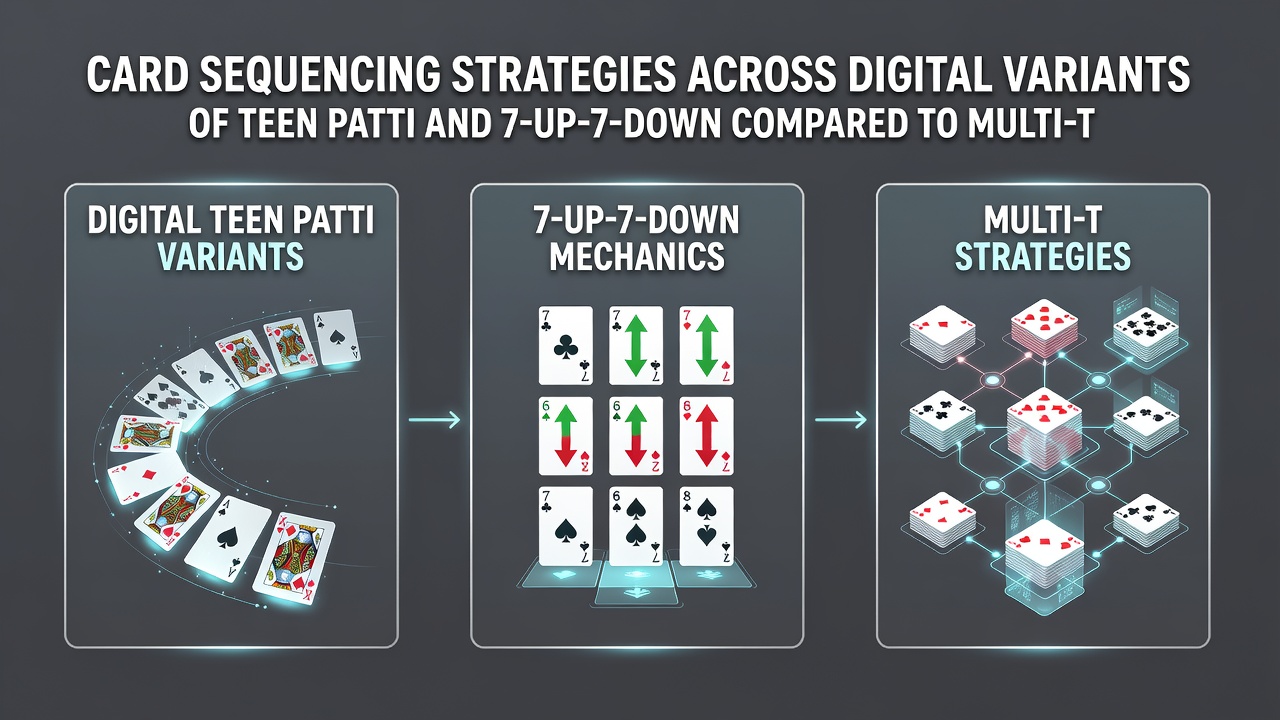
Platform analytics from 2026 demonstrate that players switching between these formats adjust their monitoring habits within the first 15 minutes of a session, and data collected through September 2026 continues to show higher engagement rates when interfaces display prior card sequences for all three games simultaneously. Researchers note that Teen Patti sequencing tends to emphasize pattern recognition in three-card combinations across 8 to 12 tables, while 7-Up-7-Down hybrid modes direct attention toward alignment between dice totals and any active card multipliers.
Platform Features Supporting Sequencing Approaches
Operators have integrated dashboard overlays that log recent card sequences in digital Teen Patti and 7-Up-7-Down rooms, and similar tools appear in Blackjack lobbies to track shoe composition without providing predictive assistance. The Canadian Centre for Gaming Research documented that regulatory standards updated in early 2026 require clear separation between informational displays and any automated advice systems, which keeps sequencing features limited to historical data presentation. Players who navigate multiple formats often discover that the visual density of multi-table Blackjack demands quicker recognition of discard patterns compared with the slower refresh cycles typical in Teen Patti and 7-Up-7-Down digital rooms.
Conclusion
Digital implementations of Teen Patti, 7-Up-7-Down, and multi-table Blackjack maintain distinct sequencing demands rooted in their core rulesets, and available data through September 2026 confirms that platform tools continue to evolve around historical tracking rather than outcome prediction. Regulatory frameworks across multiple jurisdictions enforce RNG integrity while permitting informational interfaces that support player awareness of card flow patterns. Those monitoring industry developments note ongoing refinements in dashboard design that accommodate simultaneous play across these formats without altering the independent probabilities governing each game.